


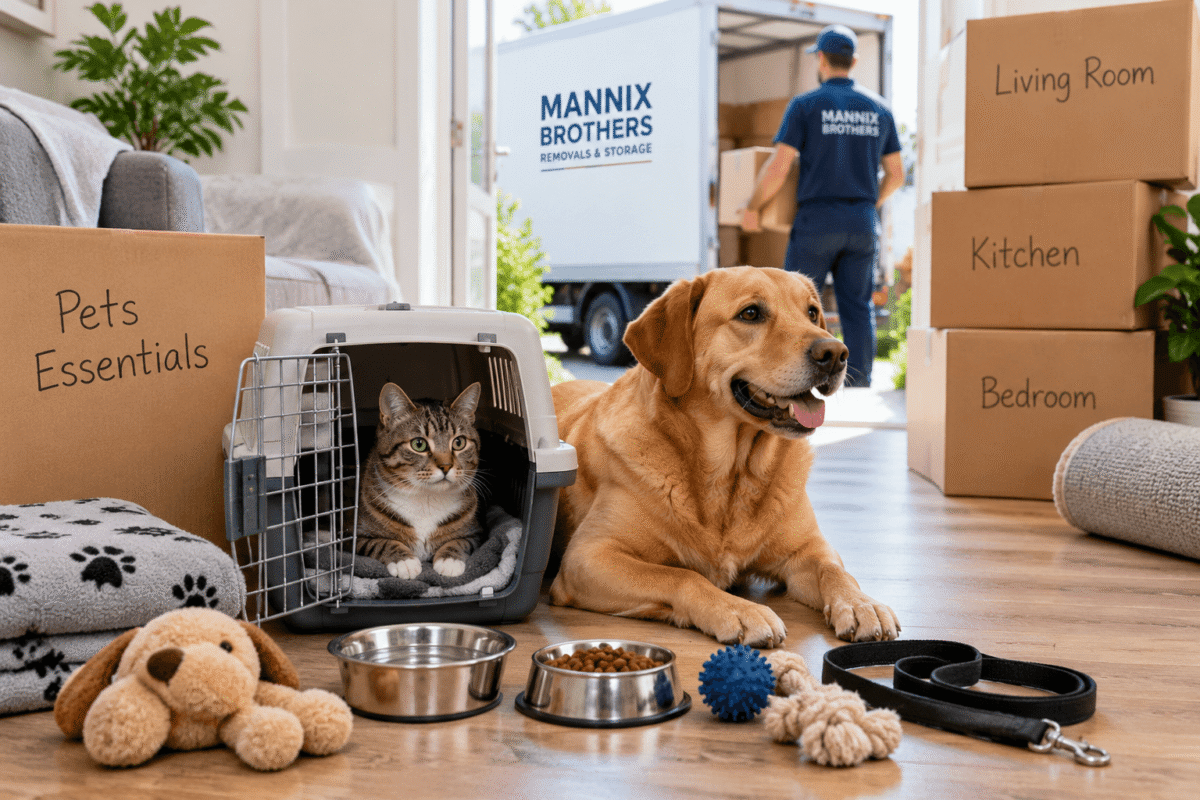
Moving home can be stressful for people, but it can be just as unsettling for pets. Boxes, unfamiliar smells, open doors, loud noises and new rooms can make animals feel anxious.
If you are planning home removals in Leicester, it is worth thinking about your pet’s needs early. A calmer moving day usually starts with a clear plan for where your pet will be, how they will travel and how they will settle into the new home.
Start Preparing Before Moving Week
Pets notice change. When boxes appear and furniture starts moving, some animals can become nervous.
Try to pack gradually rather than changing the whole house overnight. Keep your pet’s bed, food bowls, toys and litter tray in their usual place for as long as possible.
If you are still arranging the move, this guide may help: How Early Should You Book a Removal Company in Leicester?
Choose a Safe Room on Moving Day
On removal day, choose one quiet room where your pet can stay while the team is working.
This room should have water, bedding, familiar toys and anything your pet needs. Put a clear note on the door so nobody opens it by mistake.
This is especially important because doors may be open for long periods while boxes and furniture are being carried out.
For wider preparation tips, read: How to Prepare Your Home for Removal Day in Leicester: A Practical Checklist
Do Removal Companies Move Pets?
Most removal firms in Leicester move furniture, boxes and household items, not pets.
You should usually transport pets yourself or arrange suitable pet transport if needed. This helps keep them safe and avoids confusion during the move.
If you are booking a removal company in Leicester, ask how the team prefers you to manage pets on the day. They may suggest keeping animals away from the main working area for everyone’s safety.
Keep Pets Properly Restrained When Travelling
If your pet is travelling by car, safety matters.
The Highway Code says dogs or other animals should be suitably restrained in a vehicle so they cannot distract the driver or injure themselves or others if the vehicle stops quickly. It gives examples such as a seat belt harness, pet carrier, dog cage or dog guard.
For cats and small animals, a secure carrier is usually the safest option. For dogs, use a suitable harness, crate or dog guard.
Update Microchip Details After Moving
Once you move, remember to update your pet’s microchip details.
GOV.UK says owners are responsible for keeping dog or cat microchip information up to date, including when they move house.
This is a small admin task, but it matters. If your pet escapes during or after the move, correct contact details can help them be returned faster.
Think About Leicester Access and Parking
Moving day can be busy around the home, especially if the removals vehicle needs to park close to the property.
Leicester City Council uses digital parking permits, including resident, visitor, business, contractor and maintenance permits. If parking restrictions apply, check the rules before the removals vehicle arrives.
Sorting access early can reduce rushing, which also helps keep pets calmer.
Pack a Pet Essentials Bag
Create a separate pet bag that stays with you.
Include food, treats, bowls, medication, leads, waste bags, litter, bedding, towels, toys and vet details.
Do not pack these items deep in the removals vehicle. You may need them quickly when you arrive at the new property.
For more on what happens during the day, read: What Happens on Removal Day? A Step-by-Step Guide
Keep Routines as Normal as Possible
Pets cope better when familiar routines continue.
Feed them at normal times if possible. Walk dogs before the removals team arrives, but keep them on a lead when outside.
For cats, it may be better to keep them indoors before and after the move until they feel settled.
Small animals, such as rabbits, guinea pigs and birds, should be kept away from draughts, loud noise and sudden temperature changes.
Be Careful With Packing Materials
Boxes, tape, bubble wrap and plastic bags can be tempting for pets, but they are not always safe.
Keep sharp tools, packing tape, cleaning products and small loose items away from animals.
If you are using home removals packing in Leicester, let the packing team know where your pet will be kept so they do not disturb that space.
Introduce the New Home Slowly
When you arrive, set up one quiet room first. Add your pet’s bed, food, water and familiar items.
Let them explore gradually once the main unloading is complete. Too much space, noise and activity at once can be overwhelming.
If your pet seems nervous, give them time. Do not force them to explore before they are ready.
When Moving Feels Too Stressful
Some pets are more anxious than others. Older pets, rescue animals and pets with health conditions may need extra care.
If you are worried, speak to your vet before moving day. They can advise on travel, calming methods and any health needs.
This related blog may also help: Why Moving Home Feels So Stressful and How to Make It Easier
What If You Need Storage?
If there is a delay between moving out and moving in, you may need storage for furniture and boxes. Pets should not be placed in storage facilities.
For your belongings, storage can be useful if your new home is not ready or you need to move in stages. Read more here: Short-Term vs Long-Term Storage: Which is Best During a Move?
Final Thoughts
Pets need calm, routine and safety during a house move. Keep them away from busy moving areas, transport them securely, update microchip details and give them time to settle into the new home.
Good planning makes moving easier for both people and animals.
For trusted removal services in Leicester, Get in touch with Mannix Brothers Removals & Storage Ltd to discuss your home move.